 0474 011 120
 info@budgettreeremoval.com.au


 0474 011 120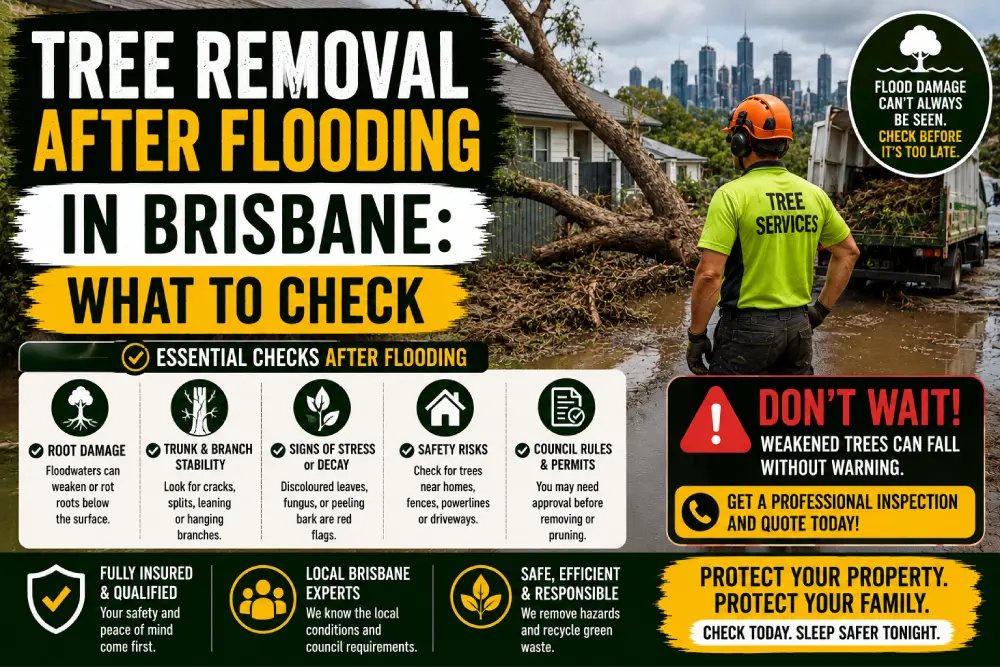
Extended inundation damages tree root systems in ways that may not be visible for months. Here's what to inspect after a flood event.
How flooding affects trees
Trees require oxygen in the root zone. Prolonged inundation (more than a few days for most species) deprives roots of oxygen, causing root death. The effects can be delayed — a tree may look fine for 6–12 months before showing visible canopy decline. By then, the root system is severely compromised.
High-risk species in Brisbane
Eucalypts and camphor laurel are particularly susceptible to root damage from inundation. Melaleuca and some paperbarks are more tolerant. Most ornamental species planted in Brisbane gardens have low flood tolerance.
What to inspect after flooding
- Check for new lean — compromised root systems often show lean first
- Look for leaves turning yellow or browning on an otherwise healthy-looking tree
- Check the trunk base for new fungal growth
- Look for wilting foliage on one side of the canopy
- Watch for branch dieback in the upper canopy over 6–12 months
When to call an arborist
If a tree near your house shows any of these signs after flooding, get an arborist assessment before the next storm season. The assessment cost ($250–$350) is much cheaper than emergency removal or damage repairs after a failure.
Need a tree arborist in Brisbane? Call 0474 011 120 or fill in our quote form. Same-day response, Mon–Sat 7am–6pm.