Controlled Tree Felling Brisbane where there’s room to safely drop the tree, and sectional dismantling where there isn’t. AQF Level 5 arborists, $20M insured, with free same-day quotes.
Felling is cutting a tree down in one piece. Tree felling Brisbane is often the fastest and most straightforward way to remove a tree when there is enough clear space for it to land safely. It requires careful planning, accurate assessment and a suitable drop zone.
That's the whole conversation. If you've got the room, felling is straightforward and the price reflects it. If you don't, the tree comes down in sections instead, which takes longer and costs more but doesn't put anything through your roof.
We do both and we'll tell you which one your site allows before you commit to anything. Felling is one method inside the wider job we cover on our tree removal page.
| Tree | Typical price |
|---|---|
| Small tree, clear drop zone | from $199 |
| Medium tree, clear drop zone | $350 to $700 |
| Large tree, clear drop zone | $700 to $1,600+ |
| Sectional dismantling, no drop zone | quoted on site |
| Sectional dismantling over a structure | quoted on site |
| Several trees on one site | quoted per site, per-tree rate drops sharply |
| Stump grinding, added to any of the above | from $80 |
Same tree, two very different prices depending on whether it can be dropped. That's the single biggest variable in tree work and it's why a photo of the tree alone isn't enough for a firm quote. We need to see what's around it.
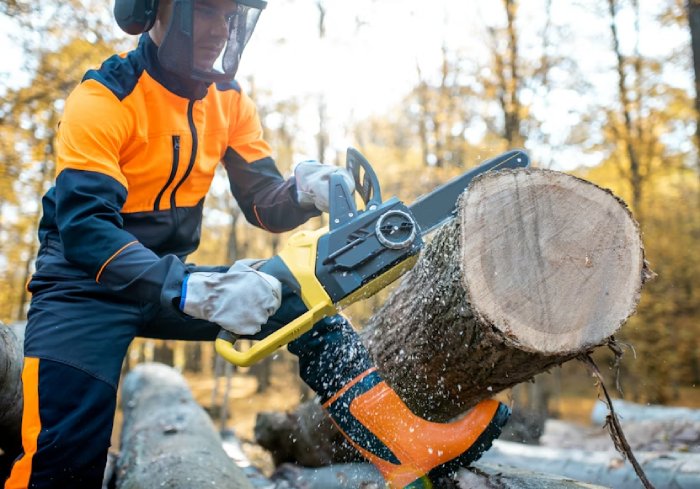
A tree is felled with three cuts. A scarf, which is a wedge taken out of the face pointing the direction of fall. A back cut on the opposite side. And a hinge of uncut wood left between them, which is what steers the tree down.
The hinge is the part that matters. Cut through it and the tree is no longer controlled, it just falls. Get its thickness and angle right and a competent faller can put a twenty metre gum within a metre of where they said it would land.
Most of our felling jobs also use a pull line, which is a rope run high into the tree to a winch or a second point, adding force in the intended direction. Wedges go in the back cut on anything with lean against the fall direction.
What we need from you is the drop zone. As a rule, the clear space should be at least as long as the tree is tall, plus a safety margin. On a standard suburban block, that can rule out tree felling Brisbane for anything much over about ten metres, which is why many Brisbane residential tree removals are instead carried out using sectional dismantling.
Dismantling means taking the tree apart from the top down. A climber, or an elevated work platform, gets to the top, and the tree comes off in manageable pieces, each one either dropped into a small clear space or lowered on a rope.
You need it when there's a house, shed, pool, fence, neighbouring property, powerline or garden underneath, which covers most of suburban Brisbane.
It's slower. A tree that could be felled in twenty minutes might take four hours to dismantle. That's the cost difference, and it's not padding.
Rigging is the part people don't see. A limb that has to come down over a pool gets tied off above the cut, cut, then lowered under control on a friction device. Done properly, a 200kg limb lands on the lawn as gently as you'd set down a bag of groceries.
There are trees that shouldn't be felled even with room to do it.
A tree with a hollow butt has nothing to make a hinge out of. Once you cut into it, it can go anywhere. Same with a tree with significant basal decay, or one where fruiting bodies of decay fungi are showing at ground level.
Heavy lean against the intended direction is another. You can pull a tree against moderate lean with a winch and wedges. Past a certain point you can't, and trying is how people get hurt.
A tree that's already been damaged, wind-thrown or partly failed is unpredictable in a different way, because the fibres are already torn. If a tree is already down or partly failed, that's an emergency removal, not a standard fell.
If we look at your tree and say it needs dismantling rather than felling, that's the reason, not an upsell.
Brisbane City Council protects some vegetation under the Natural Assets Local Law, and individual trees and stands can carry a Vegetation Protection Order. Felling a protected tree without approval carries a fine, and the fine is far more than the job.
Most standard suburban trees on standard residential blocks aren't covered. But it depends on the species, the size, the overlay your property sits in, and whether a previous owner had a VPO placed. We check before we quote, every time. More detail on our council permits page.
If approval is needed, we'll help you put the application in. Sometimes that means an arborist report, which we can also write.
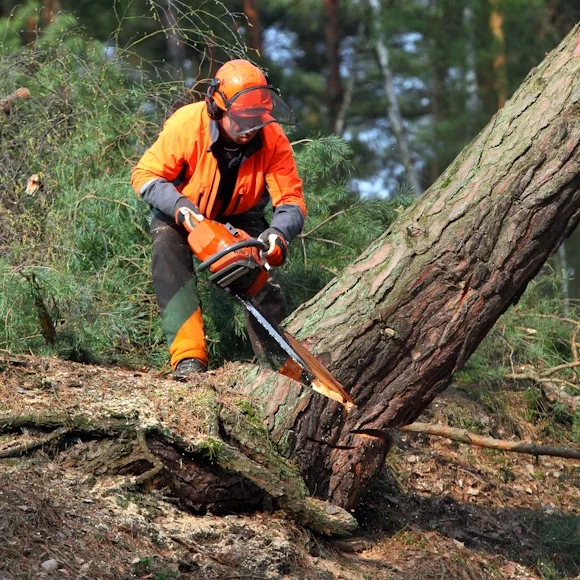
Felling comes into its own where there's open ground. On a larger block with a clear paddock or a wide setback, dropping trees whole is dramatically cheaper than dismantling, and the per-tree price falls a long way once there are more than a handful.
What changes on those jobs is the waste. On a suburban block everything gets chipped and taken away. Where there's room to leave it, most people want the timber cut into rounds for firewood or windrowed. Tell us which and it comes off the price.
Tell us where the property is when you enquire and we'll confirm we cover it before quoting.
We arrive with the gear the quote was written for, walk the site, and confirm the plan. Drop zone marked, escape routes cleared, anything at risk moved.
If we're felling, there's a clear exclusion zone and nobody outside the crew is inside it. If we're dismantling, the same applies to the area under the tree.
Timber is processed as it comes down, chipped and loaded on a suburban job or stacked as agreed where there's room. Before we leave, the site is raked and hard surfaces are blown down. Stump grinding, if you've booked it, happens at the same visit.
Felling is the one job in tree work where the assessment matters more than the cutting. Whether there's sound wood to make a hinge from, how much lean can be pulled against, whether the butt is hollow. Get those wrong and there is no second attempt.
That assessment is what AQF Level 5 covers, and it's why we won't fell a tree we haven't looked at properly, even when the customer is certain it's straightforward.
If we look at your tree and say it needs to come down in sections rather than in one piece, that's the assessment talking, not the invoice.
Straight felling is rare on a standard suburban block, so most of our work inside Brisbane involves sectional dismantling. Tree Felling Brisbane is more practical on larger blocks around Bracken Ridge, Fitzgibbon and the northern corridor, where there is genuinely enough space to safely drop a tree in one piece.
If you're on a 400 square metre block in Bulimba, assume sectioning and price accordingly. If you're on a larger block north of the airport, felling is probably on the table and the job is much cheaper.
One of the tree, and a second showing what's around it. That second one is the one that determines the price.
Send us a photo and your suburb. Most quotes go back the same day, and there's no obligation.
Felling is one method of removal, where the tree comes down in a single piece. Removal is the whole job, which might be a fell or might be sectional dismantling depending on what's underneath.
As a rule, a clear length at least equal to the tree's height, plus a margin either side. On a standard suburban block that limits felling to smaller trees.
Prices start from $199 for small trees with a clear drop zone. For medium trees expect $350 to $700, and large trees $700 to $1,600+. Sectional dismantling, where the tree can't be dropped, is quoted on site and costs more because it takes far longer.
Only if there's a genuine drop zone away from the house. If there isn't, we dismantle it in sections instead. That's slower and costs more but there's no risk to the building.
Sometimes. Vegetation covered by the Natural Assets Local Law or a Vegetation Protection Order needs approval. Most standard suburban trees don't. We check as part of the quote.
Legally you can on your own unprotected tree, but felling is the single most dangerous task in tree work. Hollow trunks, hidden decay and lean are the things that kill people, and they aren't obvious from the ground.
The strip of uncut wood left between the scarf and the back cut. It controls the direction of fall. Cutting through it removes all control over where the tree goes.
A straightforward fell is often under an hour including cleanup. The same tree dismantled in sections can take most of a day.
On suburban jobs it's chipped and removed. Where there's room to leave it, most people want it cut into rounds or windrowed, and that comes off the price.
Moderate back-lean can be pulled with a winch line and wedges. Heavy lean against the fall direction means dismantling instead. We assess that on site.
Yes, and it's cheapest booked at the same visit while the machine is already on site. Stump grinding runs from about $80 depending on the diameter.
A hollow butt gives you nothing to make a hinge from, and once you cut into it the tree can go anywhere. Significant basal decay, fruiting bodies of decay fungi at ground level, or a tree that's already been wind-thrown or partly failed are the same problem. Those get dismantled instead.
Call 0474 011 120 or send photos through the form. Most felling quotes come back the same day.
 0474 011 120
 info@budgettreeremoval.com.au


 0474 011 120