 0474 011 120
 info@budgettreeremoval.com.au

Tree pruning Brisbane
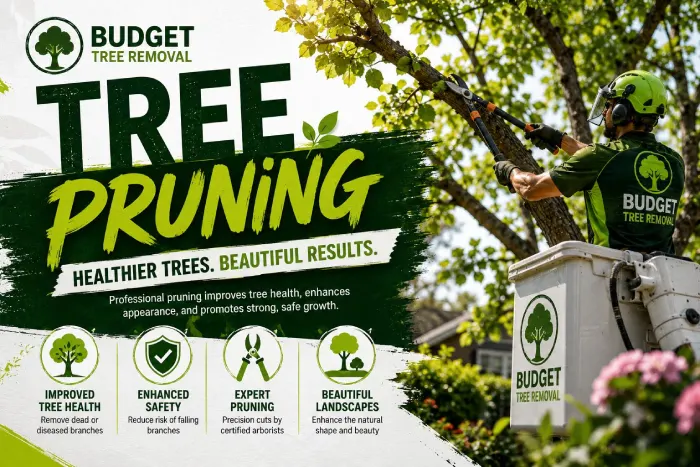
Crown thinning, deadwooding, crown lifting and formative pruning by AQF Level 5 arborists, with all work carried out to AS 4373 standards. Our Tree Pruning Brisbane services include free same-day quotes across Brisbane’s north and east.
 0474 011 120
Precision, not a chainsaw and guesswork
Pruning is the difference between a tree that stays where you want it for thirty years and one that becomes a problem you eventually pay to remove.
Done properly, tree pruning Brisbane is precise. Every cut is placed so the tree can close over the wound, and nothing is removed without a reason. Done badly, it’s a chainsaw and guesswork, and the tree can spend the next five years growing back thicker and weaker than before.
We prune to AS 4373, the Australian Standard for pruning amenity trees. That's not a marketing line, it's the document that defines where a cut goes and how much you're allowed to take.
What tree pruning costs in Brisbane
| Job | Typical range |
|---|---|
| Small tree or shrub, under 4m | $150 to $250 |
| Medium tree | $250 to $550 |
| Large tree | $550 to $1,200+ |
| Deadwooding a mature gum | quoted on site |
| Formative pruning on young trees | quoted on site |
| Hedge or screen maintenance | quoted by the metre |
Height matters less than you'd think. Access and what sits under the tree matter more. Cutting a limb over open lawn is quick. Cutting the same limb over a colorbond roof means rigging it, and rigging is what takes the time.
Booking several trees on one visit is meaningfully cheaper than booking them separately, because most of the cost is the crew and truck being there.
The types of pruning, and which one you need
Crown thinning
Branches are removed from inside the canopy so wind passes through instead of pushing against the whole crown. The tree keeps its height and shape but carries less sail area.
This is the right job for a tree that worries you in storms, and for getting light back onto a lawn that's gone thin underneath. It's also the most commonly mis-sold pruning job, because it's easy to over-thin and end up with all the foliage at the tips of bare branches. That's called lion-tailing and it makes limbs more likely to fail, not less.
Crown reduction
Overall height and spread come down, with each cut made back to a lateral branch that can take over. Covered in detail on our tree lopping page, since that's what most people are asking for when they use the word lopping.
Deadwooding
Only dead material is removed. Nothing living is cut. On mature eucalypts this is the single highest-value pruning job you can book, because dead limbs in a gum are the branch that comes down on a car in November.
If you've got a big gum over a driveway or an entertaining area and it's never been deadwooded, do that before anything else.
Crown lifting
Lower branches are removed to create headroom under the tree. The right clearance depends on what you're clearing for — a footpath, a driveway or a roofline are all different. We have a separate page on canopy lifting with the working figures.
Formative pruning
Young tree work. A few small, well-placed cuts in the first five years set the branch structure for the tree's whole life and prevent the co-dominant stems and included bark that cause failures decades later.
It's cheap, it takes ten minutes a tree, and almost nobody does it. If you've planted anything in the last few years, this is the best money you'll spend on it.
Clearance and structure pruning
Cutting to a defined distance from a roof, a fence line, a boundary or a service line. Ordinary work, but where the cuts land still matters.
Where a cut goes, and why it matters
Trees don't heal. They compartmentalise, which means they grow new tissue over a wound and wall the damaged part off behind it.
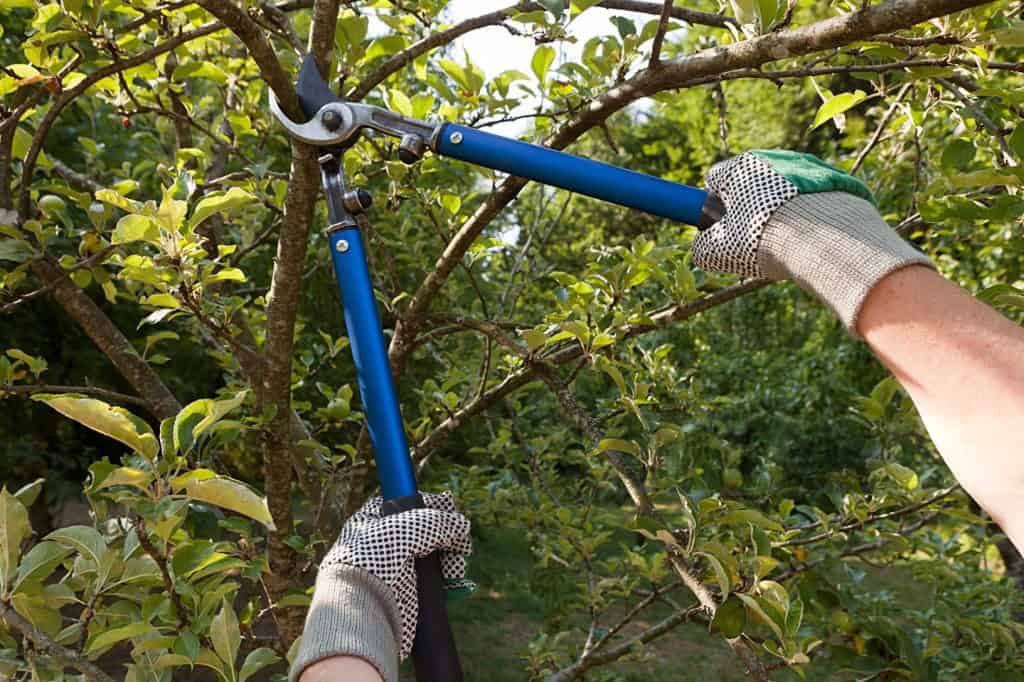
Whether they can do that depends almost entirely on where you cut. The branch collar—the slightly swollen ring where a branch meets the trunk—contains the tissue that helps seal the wound. In professional tree pruning Brisbane, cuts are made just outside the branch collar to support proper wound closure. Cutting flush to the trunk removes the collar, making it harder for the tree to seal the wound and potentially allowing decay to spread into the trunk.
Stub cuts are the other failure. Leave a long stub and there's no growing point to draw the wound closed, so the stub dies back and rots inward.
You can see the difference on any street in Brisbane. Trees pruned properly ten years ago have clean, closed-over scars. Trees flush-cut or stubbed have cavities. There's more on how a tree closes a wound in our guide to tree wound care after pruning.
How much you can take at once
The working limit on a mature tree is about a quarter of the live canopy in one season. Younger, vigorous trees tolerate more. Stressed, old or recently transplanted trees tolerate a lot less.
Take too much and the tree responds with epicormic growth—the burst of weak shoots you see after topping. This growth is attached only to the outer wood, so it can tear out in strong winds. The tree may also return to its original size within a few years, often with poorer structural strength. This is why professional tree pruning Brisbane focuses on selective cuts rather than excessive crown reduction.
If you want a big change in size, stage it. Two visits eighteen months apart costs a bit more and gives you a tree that's still healthy at the end. If the tree is too far gone for that, removal is the honest answer and we'll say so.
When to prune in Brisbane
Timing here is driven by storm season and by a handful of species that bleed or crop at particular times.
Deadwooding should be done before storm season, so by October at the latest. That's the single most important timing rule on this page.
Jacaranda after flowering, late spring. Poinciana in late winter before the flush. Mango straight after fruiting, February or March, or you cut off next season's crop. Fig in late winter. Camphor laurel any time, and it will need doing again. Silky oak late winter, and deadwood it properly because the timber is brittle.
Avoid heavy live pruning on anything in the peak of summer. The tree is already under heat and water stress and you're adding to it. Our spring trimming guide covers the seasonal detail.
Neighbouring trees and overhanging branches
Queensland has a specific legal process for trees that cross a boundary, set out in the Neighbourhood Disputes (Dividing Fences and Trees) Act. What you may cut, who pays for it and what you have to do first all depend on the tree and the circumstances, and there are real limits — particularly if the tree is protected, or if cutting would damage or destabilise it.
We get asked about this constantly, and we're not the right people to give you the legal answer. Read the Queensland Government's guidance on disputes about fences, trees and buildings before you cut anything.
The practical advice we can give: have the work done by someone qualified, and keep the quote and the photos. There's a longer explanation on our blog covering overhanging trees and neighbour rights in Brisbane. If you need a written assessment for a dispute, that's an arborist report.
What happens on the day
The arborist walks the tree first and tells you what they're going to remove and why, before starting. If the plan changes once they're up there, you get told.
Cuts are made from a rope and harness or an elevated work platform, depending on the tree and the access. Material is lowered rather than dropped wherever anything below can be damaged.
Everything gets chipped as it comes down. When we leave, the lawn is raked and the hard surfaces are blown off. If you want the mulch, say so and it stays.
Why people use us
The whole value of a pruning job is in the decisions, not the cutting. Which limbs, how much, where the cut lands, and whether the tree can take it this season.
Our arborists hold AQF Level 5, which covers tree assessment and reporting. That's the qualification you want in the person choosing what comes off your tree, and it's the difference between pruning and lopping in practice.
We'd also rather tell you your tree needs nothing than sell you a job. Plenty of trees people ring about are fine and just look untidy.
Tree pruning across Brisbane
Most of our pruning work sits in the older suburbs where the trees are mature enough to need it. Grange, Windsor, Lutwyche, Albion and Hamilton have a lot of interwar gardens with big figs and poincianas that have never been formatively pruned and now need staged reduction. The eastern suburbs run to mangoes and jacarandas.
Newer areas are a different job entirely. If you've planted in the last five years anywhere north of Chermside, the work you need is formative pruning, and it costs almost nothing compared to fixing the structure later.

Send a photo and we'll price it today
Photos and your suburb are usually enough.
Get a price for your tree
Send us a photo and your suburb. Most quotes go back the same day, and there's no obligation.
Common questions
Pruning removes branches at defined points so the tree can seal the wound. Lopping cuts limbs back to stubs without regard for structure. Pruning keeps the tree healthy. Lopping shortens its life and makes it more hazardous.
Small tree pruning starts from around $150 to $250. Medium trees run $250 to $550. Large trees are $550 to $1,200+. Access and what's under the tree affect the price more than height does.
Deadwooding before storm season, so by October. Flowering trees after they flower. Mango after fruiting. Avoid heavy live pruning in the middle of summer.
About 25 percent of the live canopy on a mature tree in a single season. Less if the tree is stressed or old. Take more and you get weak epicormic regrowth.
Removing selected branches from inside the canopy so wind passes through, without changing the tree's height or shape. It's the usual answer for a tree that worries you in storms.
The branch collar contains the tissue that seals the wound. Cutting flush removes it, so the tree can't close over and decay gets into the trunk. Cuts go just outside the collar.
Queensland has a specific process for trees and neighbours, with limits that depend on the tree and the situation. Read the Queensland Government guidance before you cut anything, have the work done by someone qualified, and keep records.
Routine pruning of an unprotected tree generally doesn't need approval. Trees covered by a Vegetation Protection Order or protected under the Natural Assets Local Law do. We check before we quote.
Removing dead limbs only. If you have a mature eucalypt over a driveway, a pool or an outdoor area and it hasn't been deadwooded, yes, you need it.
Yes, quoted by the metre. Lilly pilly, murraya and viburnum screens are regular work.
Heavy pruning will, and not in a good way. The regrowth is weakly attached and the tree is back to its old size within a few years. Correct pruning doesn't cause that response.
Yes. Chipped, raked, blown down. The mulch leaves with us unless you want it kept.
Other Tree Services We Offer
Get a quote
Call 0474 011 120 or send photos through the form. Most pruning quotes come back the same day.