 0474 011 120
 info@budgettreeremoval.com.au

 0474 011 120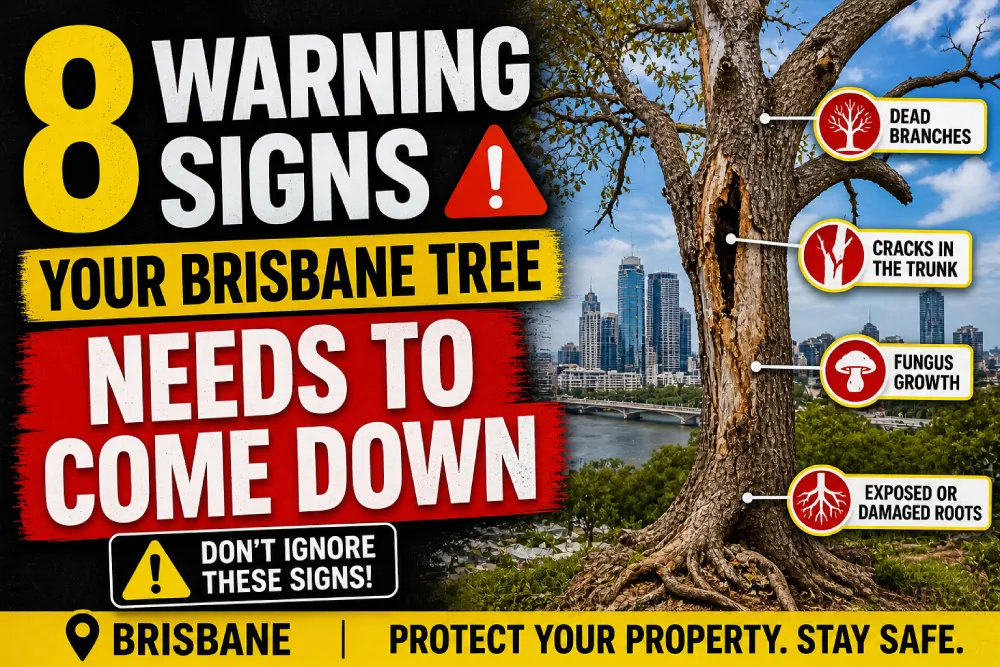
Most tree failures aren't random. These are the physical signs every Brisbane homeowner should recognise before a tree becomes a problem.
1. Significant lean that wasn't there before
A tree that develops a sudden lean — especially after heavy rain — has potentially undergone root failure. A slow lean that's been there for years is different from a lean that appeared recently. New leans warrant immediate assessment.
2. Large deadwood in the canopy
Dead branches in a tree's upper canopy are a falling hazard. Deadwood doesn't break in a predictable way — it can fail on a calm day without warning. Deadwooding (removing dead branches) extends the life of a tree. Significant deadwood throughout the canopy is a sign the tree is in serious decline.
3. Fungal growth at the base
Bracket fungi growing from the trunk base or root collar indicate internal decay. Not all fungi mean immediate failure, but fungal fruiting bodies near the base or in wounds are a serious warning sign requiring professional assessment.
4. Bark damage or cavities
Large cavities, severe bark damage, or areas where the bark is absent reduce the tree's structural integrity. A hollow section near the base can mean the trunk has insufficient wood to support the canopy in a storm.
5. Root damage or soil heaving
Construction, trenching, compaction, or soil disturbance near a tree's root zone weakens the anchoring roots. Soil heaving on one side of a tree (the ground lifting near the base) can indicate root failure is already beginning.
6. Multiple co-dominant leaders with included bark
Two or more main stems competing at the same height with bark squeezed between them (included bark) is a structural defect. The union is much weaker than a well-attached single stem and prone to splitting in storms.
7. The canopy has significantly thinned
A healthy tree produces consistent foliage each season. A canopy that has thinned noticeably over two or three seasons — with sparse foliage and many dying small branches — indicates root system stress or disease.
8. The tree is dying and near a structure
A dying tree loses structural integrity over time. A dead tree can remain standing for years, but internal decay accelerates once biological processes stop. Dead trees near houses, pools, or powerlines should be assessed promptly.
Need a tree arborist in Brisbane? Call 0474 011 120 or fill in our quote form. Same-day response, Mon–Sat 7am–6pm.