 0474 011 120
 info@budgettreeremoval.com.au

Tree Lopping Grange
Crown reduction, clearance pruning and deadwooding for Grange 4051. Character-home friendly, AS4373 cuts, fixed quotes — professional Tree Lopping Grange services tailored to established gardens and heritage streetscapes.
 0474 011 120
Inner-North Grange — Heritage Trees, Sensible Pruning
Grange is one of the inner-north suburbs that still carries its 1920s character — Queenslanders on tight blocks, mature gardens, jacarandas and figs that predate most of the current owners. Right in the middle of that established canopy, Tree Lopping Grange services focus on preserving what makes these properties valuable while keeping trees safe, balanced, and well-maintained.
That makes most of our Grange work pruning rather than removal. Crown reduction to keep the height down without losing the canopy shape. Clearance pruning to get branches off heritage roofs and gutters. Deadwooding before storm season. Done properly, the trees stay healthy for decades.
Photos to 0474 011 120 for a fixed quote the same day.
Why Heritage Trees Need Careful Pruning
Old-school lopping (mid-branch stub cuts) is the wrong answer for a mature Grange poinciana or fig. Once you stub-cut a heritage tree, decay sets in, structure is compromised, and the tree’s lifespan shortens — which is why professional Tree Lopping Grange focuses on proper pruning methods that protect the tree rather than starting the countdown to removal.
Proper crown reduction — cuts back to lateral branches or the collar, per AS4373-2007 — keeps the natural shape, allows the tree to heal, and lets you keep the heritage feature your property is built around.
Local Grange work:
- Crown reduction on jacaranda, poinciana, fig and silky oak
- Verandah and Queenslander roof clearance
- Boundary directional pruning
- Mango height management
- Deadwooding before storm season
- Camphor laurel control (where applicable)
Tree lopping services in Grange
- Heritage-sensitive crown reduction
- Selective canopy thinning for light
- Verandah, gutter and Queenslander roof clearance
- Boundary fence directional pruning
- Storm-season deadwooding
- Powerline-vicinity work with Energex coordination
- Pool and outdoor entertaining area pruning
- Same-day stump grinding when removal is the call
Common Tree Lopping Jobs Around Grange
Inner-north suburbs throw up their own pattern of work.
Established jacaranda over the heritage roofline. The branches scrape the iron, the gutters fill in spring, and the powerline's getting close. Crown reduction handles all three without losing the spring flowering.
Mature poinciana with seed pods over the deck. Beautiful tree, messy three months of the year. Selective thinning reduces the litter without changing the overall feel.
Fig that's pushed too close to the foundation. Selective pruning to slow root demand. Sometimes it's enough; sometimes removal is the honest answer. We'll tell you straight either way.
Silky oak shedding everywhere. Quick to shed flowers and leaves but easy to manage with selective thinning every couple of years.
Pre-sale presentation. Grange properties sell on presentation. A well-pruned garden at the listing photos makes a real difference.
How a Grange Job Runs
Quote. Photos to 0474 011 120 — fixed price back same day.
Schedule. Most jobs within a week. Hazards prioritised.
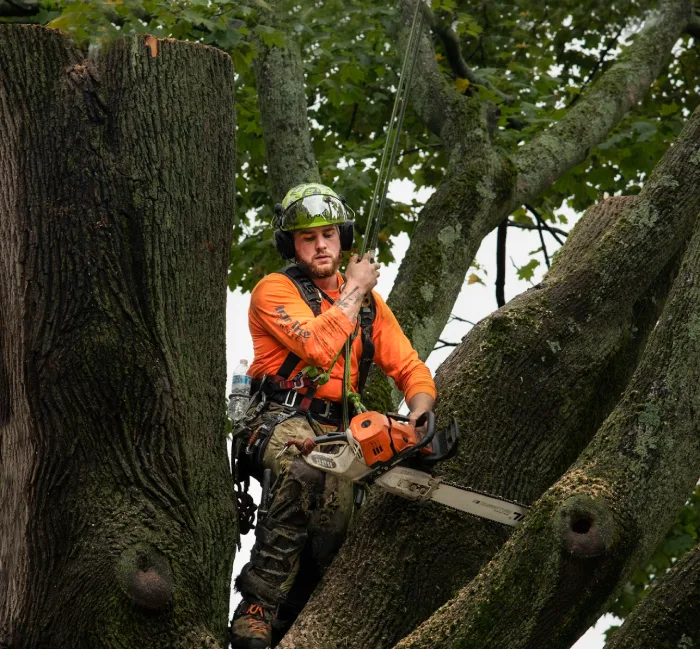
On site. Climbing crew with proper rigging. AS4373 cuts. Drop zones managed for tight character blocks. Heritage roofs and verandahs protected.
Cleanup. Chipper, truck, rake, sweep. Verandah cleared. Yard usable the same afternoon.
Grange Permits & Heritage Overlays
Significant pockets of Grange sit inside BCC's character residential and pre-1911 heritage overlays. The Natural Assets Local Law also applies. Major pruning on protected trees usually needs approval.
We check both before quoting. If a permit's required, we lodge it — arborist report where needed — and only proceed once it's cleared.
Heritage Aware, Properly Qualified, Honest About Removal
Working on heritage trees requires care. We climb instead of smash. We rope down instead of free-fall. We protect garden beds, verandahs and fences. AQF Level 5 lead arborist. $20M public liability. Certificate of Currency on request before work starts.
Heritage Tree Maintenance Cycles That Actually Work in Grange
Grange owners often inherit trees rather than choose them — the jacaranda was on the block when they moved in, the fig was already 50 years old, the poinciana came with the Queenslander. That changes the maintenance approach. You're not shaping a tree from young; you're managing one that's already set in its ways.
For most mature Grange trees, the maintenance cycle that produces the best long-term outcome is light and frequent rather than heavy and rare. The numbers tell the story.
A mature poinciana given a light prune every 2 years stays healthy, keeps its shape, and rarely throws hazardous limbs. The same poinciana left for 8 years often needs a major reduction job costing several times more — and the tree takes 2–3 years to recover from the intervention.
A mature jacaranda on the same cycle stays compatible with the gutters and powerlines around it. Skip the cycle and you're in catch-up mode, which never really catches up — the tree has thrown growth that's now too thick to take off in one visit without stressing it.
Mature figs need less frequent work — every 4–6 years for clearance pruning and deadwood removal — but they need it done conservatively. Heavy reduction on figs causes long-term decline because they don't seal wounds well.
If you've just bought a Grange property with established trees, the smart first move is an arborist assessment to set up the right cycle. Once it's running, the cost averages out lower and the trees stay healthier. We can quote the assessment alongside any initial work.
Tree Lopping Grange — Common Questions
Small to medium pruning $250–$700. Larger heritage-tree reductions $700–$2,500+. Tight access on character blocks can push the upper end. Fixed quote after photos.
Often, in Grange. Character overlays and Natural Assets Local Law both apply in places. We check this for your specific tree before quoting.
Yes. Crown reduction done to AS4373 keeps the natural shape — the tree just sits a bit smaller. Topping or stub-cutting destroys the shape; that's not what we do.
Yes — that's standard heritage work for us. Drop zones marked, branches hand-lowered, garden beds covered when needed.
Grange is on our regular run. Quotes same day. Most jobs scheduled within 3 to 10 business days.
Yes — chipper, truck, rake, sweep, verandah cleared. The quote covers all of it.
Tree Lopping in Suburbs Near Grange
Get a Free Tree Lopping Grange Quote Today
Call 0474 011 120 or fill in the form. Same-day responses Monday to Saturday, 7am–6pm.