 0474 011 120
 info@budgettreeremoval.com.au

Tree Lopping Fitzgibbon
Crown reduction, deadwooding and storm-season pruning across Fitzgibbon 4018. Fixed quotes, qualified arborists for reliable Tree Lopping Fitzgibbon services.
 0474 011 120
North Side, Newer Estates, Still Big Trees
Fitzgibbon is a relatively newer-developed northern suburb compared to the inner-east heritage pockets. That said, you've still got plenty of mature trees — the older lots carry established gums, the newer estate plantings have hit the 10–15 year mark, and there are camphor laurels in spots that were rural before subdivision. It all adds up to steady demand for professional Tree Lopping Fitzgibbon work done properly, not rushed.
Lopping calls here usually come down to safety (deadwood up the gum, branch over the play area), neighbour management (overhanging the colorbond), or storm-season prep (it's coming, the limb won't hold).
Photos to 0474 011 120 — fixed quote the same day.
The Honest Difference Between Lopping and Pruning
True lopping (mid-branch stub cuts) is the worst possible thing for most trees. Cheap on the day, expensive in the long run. The stub decays, water shoots replace the canopy, and the structure weakens — which is why professional Tree Lopping Fitzgibbon work avoids this method entirely in favour of proper pruning.
Crown reduction does what people actually want under the word "lopping" — smaller, neater tree, problem branches gone — but cuts back to lateral branches or the collar so the tree heals. AS4373-2007 is the standard. We follow it on every job.
Fitzgibbon work patterns:
- Crown reduction on established gums and jacarandas
- Selective deadwooding before storm season
- Boundary directional pruning
- Clearance work over pools, play areas and pergolas
- Powerline-vicinity work with Energex coordination
- Camphor laurel control and removal
Tree lopping services in Fitzgibbon
- Crown reduction on mature trees
- Selective thinning to reduce wind catch
- Clearance pruning over roofs and pergolas
- Pool and play-area safety pruning
- Boundary line directional cuts
- Storm-season deadwooding
- Camphor laurel removal (no permit required)
- Stump grinding on the same visit
Common Tree Lopping Jobs Around Fitzgibbon
The job mix is consistent with what you'd expect on the north side.
Eucalypt with deadwood up top. Common on the older Fitzgibbon blocks. Deadwooding before storm season is straightforward, cheap, and avoids the bigger problem of a limb on the roof.
Jacaranda over the fence. Manageable with directional pruning from your side. Saves the awkward conversation with the neighbour.
Camphor laurel taking over. Declared weed under BCC — no permit needed for removal or significant reduction. We see plenty of these in 4018.
Pool clearance. Newer Fitzgibbon homes often have an inground pool with trees behind. Leaves and bark in the filter cost more long-term than annual pruning costs.
Storm-prep season. November to March we get a run of pre-emptive jobs. Cheaper than insurance excesses after a limb comes down on the roof.
How a Fitzgibbon Job Runs
Quote. Photos to 0474 011 120 — fixed price back same day.
Schedule. Most jobs within a week. Hazards prioritised.
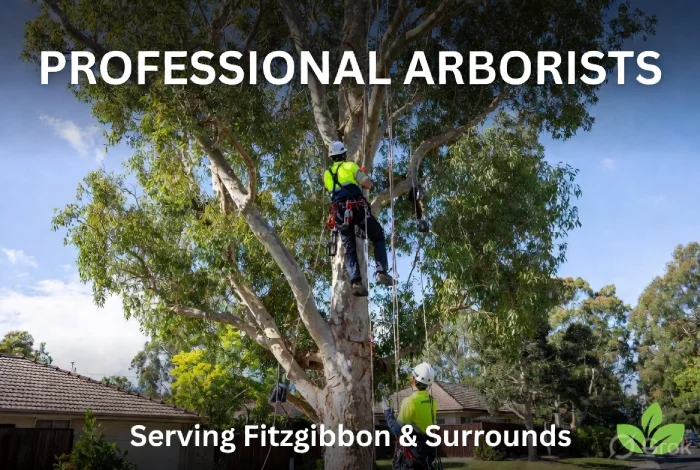
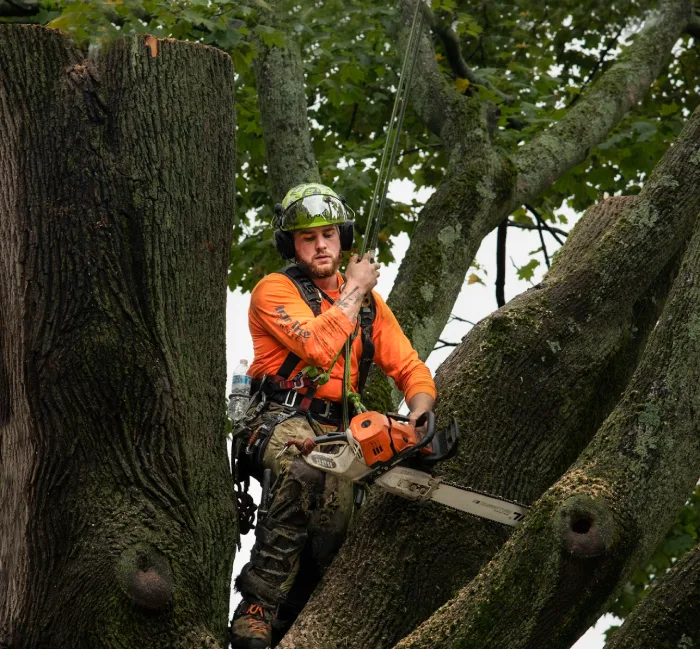
On site. Climbing crew or EWP. AQF Level 5 arborist running the cuts. Drop zones managed.
Cleanup. Chipper to truck, lawn raked, hard surfaces swept. Yard usable the same afternoon.
Fitzgibbon Permits & Protected Trees
BCC's Natural Assets Local Law applies across Fitzgibbon. Trees over 4m tall or 40cm trunk circumference are usually protected, with exemptions for camphor laurel and cocos palm.
Significant pruning on protected trees needs approval. We check this against BCC mapping before quoting and handle the permit application if it's needed.
Fixed Quotes, Qualified Crews, No Surprises
We don't run estimates that drift. The number after photos is the number on the invoice. AQF Level 5 lead arborist on every job. $20M public liability with Certificate of Currency on request. We turn up, do the job properly, and clean up before we leave.
Estate Plantings and Formative Pruning in Fitzgibbon
A lot of Fitzgibbon's housing stock is on lots subdivided in the last 20–30 years. The trees on those blocks were either planted by the developer (typically smaller species like crepe myrtles, lillipillies, or tibouchina) or by the original homeowner — and that second category is where most of our work comes in.
Trees that were planted 15 years ago and never touched are hitting awkward sizes now. The crepe myrtle in the front yard has gone from a 2-metre feature to a 6-metre dome blocking the front of the house. The eucalypt out the back that was supposed to "stay small" is at 12 metres and rising. The mango is dropping fruit no one can reach.
The right intervention at this stage isn't always major reduction — it's formative pruning. You're shaping the tree's permanent structure, removing crossing branches, encouraging a single strong leader where appropriate, and setting the tree up for its mature form. Done well at this stage, a 15-year-old tree can be guided into a much better shape by the time it's 30, without dramatic intervention.
If your trees fit this profile — planted 10 to 20 years ago, never really pruned — it's worth getting them assessed now rather than waiting another decade. A modest formative pruning visit costs $400–$700 typically and saves you thousands later in remedial work.
We can also advise on species choice if you're replacing trees or planting new ones. Some species commonly sold at nurseries grow into far bigger trees than the label suggests. We've seen plenty of "compact" gums hitting 20 metres in suburban Fitzgibbon yards.
Tree Lopping Fitzgibbon — Common Questions
Small to medium pruning $300–$700. Larger crown reductions or full-day jobs $700–$2,000+. Photos to 0474 011 120 for a fixed quote.
For significant work on protected trees, often yes. We check the protection status of your tree before quoting and lodge any required application.
Yes. Genuine hazard limb work is prioritised — usually on site within 24 to 48 hours. Call 0474 011 120 directly for emergencies.
Most pruning jobs take 2 to 5 hours. Multi-tree or large reduction work runs a full day. Time estimate given with the quote.
$20M public liability, workers comp for the crew. Certificate of Currency on request before work starts.
Yes — chipped, removed, raked, swept. No kerbside pile to deal with after.
Tree Lopping in Suburbs Near Fitzgibbon
Get a Free Tree Lopping Quote — Fitzgibbon
Call 0474 011 120 or fill in the form. Same-day responses Monday to Saturday, 7am–6pm.